1. Start with the rider
Weight. Every scooter has a weight capacity, from 250 lb (EV Rider Transport AF+) to 500 lb (Pride Maxima) on our list. Choose one with margin over the rider's weight plus whatever they carry. Riding above the rating puts the scooter outside what the maker built and tested it for.
Steadiness and steering. A scooter is steered with a tiller, like handlebars, and the rider sits upright without side support. The CMS comparison of scooters and power wheelchairs puts it simply: a scooter "requires the ability to use tiller steering" and needs the rider "to maintain postural stability while in motion"; a power wheelchair "is used when the patient can't safely operate a tiller". If you are unsure, that is a question for the doctor or a physical therapist, before you shop.
2. Decide where it will go
- Mostly indoors and in stores: turning radius matters most. A 3-wheel scooter or a tight-turning 4-wheeler such as the Elite Traveller 2 Platinum (37 inches). See 3-wheel vs 4-wheel.
- Sidewalks and parks: four wheels, more ground clearance, bigger tires.
- Gravel, grass, long rides: a full-size or outdoor scooter. Read our all-terrain guide.
Then put numbers on it. Indoors, the turning radius decides whether you can turn around in a hallway or a store aisle: Vive gives its 3-wheel scooter 31.2 inches, Pride gives the Elite Traveller 2 37 inches, and Drive's outdoor Cobra GT4 needs 82. Outdoors, ground clearance and tire size decide what a curb cut or a gravel path does to the ride: 1.25 inches on the Go Go Ultra X, 3.5 on the Golden Buzzaround XL, 7 on the Cobra GT4, all per the makers. If the scooter will mostly live in an apartment and a car, favor the small number; if it will mostly live on the street, favor the big one.
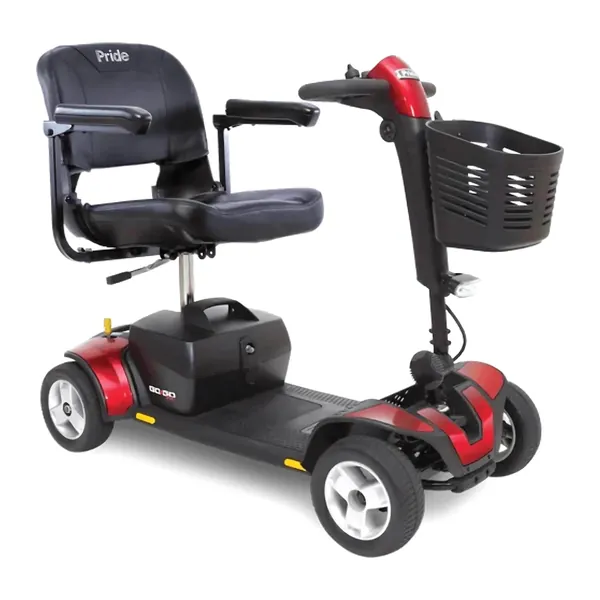
Our No. 1 overall: a 325 lb rating, 12 miles and Pride's lifetime frame warranty on a scooter that still breaks down to a 44 lb heaviest piece.
3. Be honest about lifting
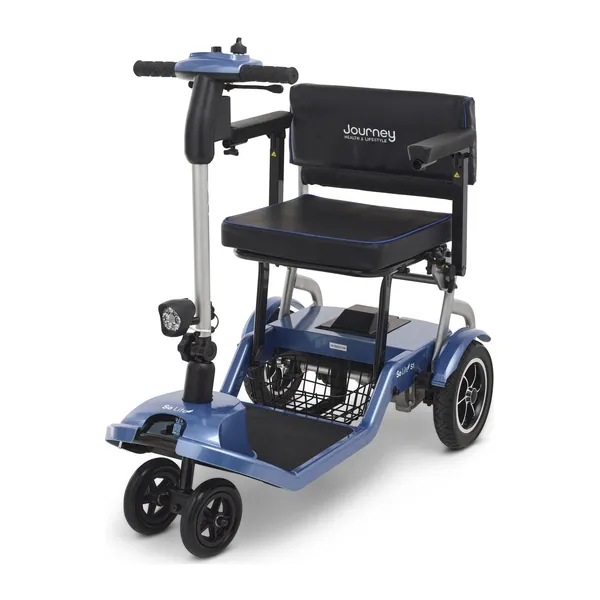
This is where most scooters disappoint. Look for the heaviest piece, not the total weight: a travel scooter that comes apart can weigh 100 lb in total and still lift in 29 to 45 lb pieces. A one-piece folder lifts all at once: 44.5 lb for the Journey So Lite, 49 to 60 lb for the auto-folders. Full-size and heavy-duty scooters have pieces of 63 to 196.8 lb: they need a ramp, a vehicle lift or a garage.
Ask who will do the lifting, at what height (a high SUV floor is harder than a sedan trunk), and how often. Our lightweight ranking sorts every scooter by its heaviest piece.
4. Range and speed: buy for the real day
Think about the longest ordinary outing: a mall visit, a zoo, a day at the fair. Makers test range at ideal conditions, often at full weight capacity on flat ground, so leave a margin. On our list, travel scooters run 8 to 12.4 miles, folders 8 to 13.5, full-size 15.5 and heavy-duty 19.5 to 35.
Speed matters less than people think: most scooters here top out between 3.7 and 5.8 mph, which keeps pace with a brisk walk. Only the Cobra GT4 reaches 10 mph.
5. Car trips, flights and cruises
If the scooter will fly, the battery decides a lot: a removable lithium battery of 300 Wh or less goes in the cabin under FAA rules, and sealed lead-acid batteries need the airline's own procedure. Our airline guide quotes the rules. For car trips, measure the trunk opening and floor against the folded size or the biggest piece; SteadyHome even checks the So Lite against your car before it ships. Our travel ranking weighs exactly these two things.
6. Read the warranty line by line
Warranties differ more than prices. On November 12, 2026:
- Pride and Drive: limited lifetime frame and 2 years on electronics on most models (14 months on the Cobra GT4).
- Golden: lifetime frame, 2 years on drive train and electronics.
- Journey: 1 year on frame, mechanical and electrical parts, labor not covered.
- Solax: 3 years frame (excluding the folding motor and tiller), 1 year electrical-mechanical.
- Vive: 5 years frame, but 6 months on electrical parts, batteries and controller.
A cheaper scooter with 6 months on its electronics can cost more over five years than a dearer one with 2. Also check who handles the claim (the seller or the maker) and whether a technician comes to you.
7. Set the budget last, and check Medicare
Only now look at price. The scooters we compare ranged from $624.99 to $4,399 on November 12, 2026, and our price guide shows what each budget buys. Medicare Part B covers scooters only when they are medically necessary inside the home, with a face-to-face visit, a written order and prior authorization: see does Medicare cover mobility scooters. Most buyers pay cash, often with an HSA or FSA.
Then use our comparison tool on your final three, and read their reviews for the catch on each.
Nothing here is medical advice. Talk to your doctor or physical therapist about whether a scooter suits you, and follow the maker's instructions.
Our three picks for this article
Scores come from our published formula; the full list is in the ranking.